









Kidney Cancer
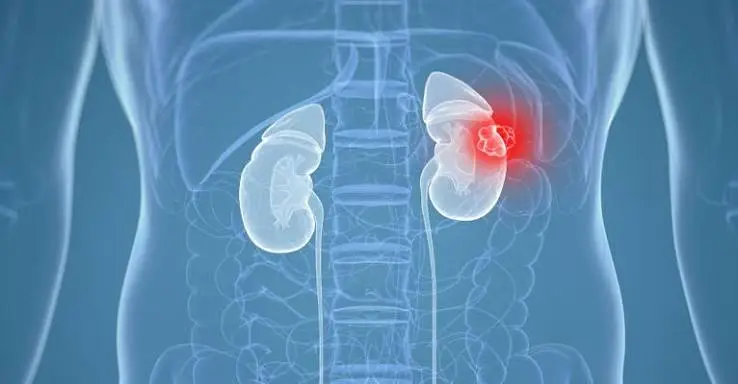
Kidney cancer is a malignant and uncontrolled proliferation and growth of cells originating from kidney cells. Renal cell carcinoma (RCC), also known as renal cell adenocarcinoma, is the most common type of kidney cancer. Approximately 9 out of every 10 kidney cancers are renal cell carcinomas. Less commonly, other types of kidney cancers discussed below may also occur. In young children, a type of kidney cancer called Wilms tumor is more likely to develop.
What Is Kidney Cancer?
Kidney cancer is a malignant and uncontrolled proliferation and growth of cells originating from kidney cells. Renal cell carcinoma (RCC), also known as renal cell adenocarcinoma, is the most common type of kidney cancer. Approximately 9 out of every 10 kidney cancers are renal cell carcinomas. Less commonly, other types of kidney cancers discussed below may also occur. In young children, a type of kidney cancer called Wilms tumor is more likely to develop.
Although kidney cancers are usually seen as a single tumor in the kidney, in some cases more than one focus may develop in the same kidney or tumors may develop simultaneously in both kidneys.
Kidney cancers have several subtypes according to the type of cells they contain. Knowing the subtype of cancer may be a factor in deciding treatment and may also help determine whether the cancer is caused by a hereditary genetic syndrome. Kidney cancers account for approximately 2% of all cancers seen in the body. Their incidence has been increasing over time. This is thought to be due both to the increasing development rate of kidney cancers and the increased availability and accessibility of diagnostic tools such as tomography and ultrasound. Kidney cancers are seen 2–3 times more frequently in men than in women and occur most commonly in the 60–70 age group.
Classification of Kidney Cancers
1- Clear Cell Renal Cell Carcinoma
This is the most common subtype of renal cell cancers and accounts for approximately two-thirds (70–75%) of kidney cancers. When viewed in the laboratory, the cells forming clear cell cancer appear very pale or clear.
2- Papillary Renal Cell Carcinoma
This is the second most common subtype of kidney cancer, accounting for approximately 10–14% of cases. These cancers form small finger-like projections (called papillae) in some parts of the tumor. Some physicians also call these cancers chromophilic because the cells stain with certain dyes and appear pink under the microscope. These are further divided into type 1 and type 2 subgroups.
3- Chromophobe Renal Cell Carcinoma
This subtype accounts for approximately 5% of all kidney cancers. The cells of these cancers are also pale like clear cells, but they are much larger and have different features when examined closely under the microscope. It is seen more frequently in women and tends to have a slightly better prognosis compared to other types.
4- Rare Types of Renal Cell Cancer
These subtypes are very rare, and each accounts for less than 1% of kidney cancers: Collecting duct carcinoma, multilocular cystic kidney cancer, medullary carcinoma, mucinous tubular and spindle cell carcinoma, and renal cell cancer associated with neuroblastoma. These are highly malignant and aggressive.
5- Unclassified Renal Cell Carcinoma
Although very rare, some tumors are called unclassified because they do not fit into any other category or contain more than one type of cancer cell.
6- Non-Renal Cell Kidney Cancer Types
Other types of kidney cancer include transitional epithelial cell (urothelial) carcinomas, Wilms tumors, and kidney sarcomas.
Transitional Epithelial Cell Carcinoma
These account for 5–10% of kidney cancers and are also known as urothelial carcinomas. They are not true kidney cancers but originate from the renal pelvis and ureter and are treated similarly to bladder cancer. They will be discussed separately under renal pelvis and ureter tumors.
Wilms Tumor (Nephroblastoma)
Wilms tumors are seen almost exclusively in children. This type of cancer is very rare among adults.
Kidney Sarcoma
Kidney sarcomas are a rare type of kidney cancer that begin in the blood vessels or connective tissues of the kidney. They account for less than 1% of all kidney cancers.
Benign (Non-Cancerous) Kidney Tumors
Some kidney tumors are benign (non-cancerous). This means they do not metastasize (spread) to other parts of the body, but they can still grow and cause problems. Benign kidney tumors may be treated with methods also used for kidney cancer, such as surgery or radiofrequency ablation. Treatment selection depends on many factors, including tumor size, symptoms, number of tumors, whether tumors are present in both kidneys, and the person’s general health.
Angiomyolipoma
Angiomyolipomas are the most common benign kidney tumors. They occur more often in women. They may develop sporadically or in people with tuberous sclerosis, a genetic condition that also affects the heart, eyes, brain, lungs, and skin. These tumors consist of different types of connective tissues (blood vessels, smooth muscles, and fat). If they do not cause symptoms, they can usually be closely monitored. If they begin to cause problems such as pain or bleeding, treatment may be required.
Oncocytoma
Oncocytomas are uncommon benign kidney tumors that may sometimes become quite large. They occur more frequently in men and normally do not spread to other organs, so surgery usually cures them. Rarely, they may become malignant.
Causes and Risk Factors of Kidney Cancer
Some kidney cancers are genetic and hereditary. Kidney cancer begins when changes (mutations) in the DNA of some kidney cells trigger cancer development. One of the most important causes is believed to be hypoxia, meaning inadequate blood supply and insufficient oxygen. Certain DNA mutations (for example, deletion in the p arm of chromosome 3) cause cells to grow and divide rapidly. Some cells may metastasize and spread to distant parts of the body.
A risk factor is anything that increases your chance of developing a disease such as cancer. Different cancers have different risk factors. Some risk factors, such as smoking, can be changed. Others, such as age, family history, and genetics, cannot be changed.
Risk Factors Include:
-
Aging: The risk of kidney cancer increases with age.
-
Smoking: Smokers have a higher risk of kidney cancer compared to non-smokers.
-
Obesity and Poor Nutrition: Obese individuals have a higher risk of kidney cancer.
-
High Blood Pressure (Hypertension): Hypertension increases the risk of kidney cancer.
-
Kidney Failure Treatment: Long-term dialysis increases the risk.
-
Occupational Risks: Exposure to substances such as trichloroethylene may increase risk.
-
Race and Gender: Kidney cancer is more common in Black individuals and occurs 2–3 times more often in men.
-
Certain Hereditary Syndromes: Such as von Hippel-Lindau disease, Birt-Hogg-Dubé syndrome, tuberous sclerosis complex, hereditary papillary renal cell carcinoma, or familial kidney cancer.
-
Family History: Risk is higher if close family members have had kidney cancer.
Can Kidney Cancer Be Prevented?
Although hereditary and genetic predisposition, race, and aging cannot be changed, some measures may help reduce the risk:
-
Avoid smoking and tobacco products.
-
Maintain a healthy weight.
-
Control high blood pressure.
-
Avoid occupational exposure to harmful substances such as trichloroethylene.
Symptoms of Kidney Cancer
Early kidney cancers usually do not cause any signs or symptoms. However, larger tumors may cause complaints. These symptoms may also occur in other diseases of the kidney and urinary tract.
Possible symptoms include:
-
Blood in the urine (hematuria)
-
Flank pain
-
A palpable mass or swelling in the side or abdomen
-
Fatigue
-
Loss of appetite
-
Unintentional weight loss
-
Persistent fever not caused by infection
-
Anemia
-
Bone pain or persistent cough if cancer has spread
Diagnosis
Approximately two-thirds of kidney cancers are diagnosed at an early stage while confined to the kidney, whereas one-third are diagnosed after metastasis.
Medical History and Physical Examination
The doctor evaluates symptoms, risk factors, and physical findings.
Blood Tests
Blood tests may reveal anemia, elevated liver enzymes, abnormal calcium levels, and kidney function abnormalities.
Urine Test
Microscopic blood in the urine may be detected.
Computed Tomography (CT)
CT scans provide detailed information about tumor size, shape, location, and spread.
Magnetic Resonance Imaging (MRI)
MRI is used when CT cannot be performed or for further evaluation.
Ultrasound
Ultrasound is one of the main diagnostic tools.
Angiography
Used occasionally in surgical planning.
Chest X-ray
Used to evaluate lung metastases.
Bone Scan
Used if bone metastasis is suspected.
Kidney Biopsy
Biopsy is not always required. However, tissue samples may be obtained in suspicious cases.
Grading System
The aggressiveness of tumor cells is evaluated using systems such as the Fuhrman grading system.
Staging of Kidney Cancer
The TNM system is commonly used.
Tumor Size (T)
-
T1: Tumor ≤7 cm and limited to the kidney
-
T2: Tumor >7 cm but still limited to the kidney
-
T3: Tumor extends into major veins or surrounding tissues
-
T4: Tumor extends beyond Gerota’s fascia
Lymph Nodes (N)
-
N0: No regional lymph node metastasis
-
N1: Regional lymph node metastasis present
Metastasis (M)
-
M0: No distant metastasis
-
M1: Distant metastasis present
Stages
-
Stage I: T1, N0, M0
-
Stage II: T2, N0, M0
-
Stage III: T3 or N1 disease without distant metastasis
-
Stage IV: T4 disease or distant metastasis
Prognosis
The prognosis depends on stage and additional factors such as calcium levels, anemia, performance status, and time to systemic therapy.
Survival Rates
Approximate 5-year survival rates:
-
Localized disease: 93%
-
Regional spread: 70%
-
Distant metastasis: 13%
-
Overall average: 75%
Kidney Cancer Treatment
Multidisciplinary Approach
Treatment decisions require collaboration among urologists, oncologists, radiologists, pathologists, and radiation oncologists.
Kidney Cancer Surgery
Surgery is the primary treatment because chemotherapy and radiotherapy are generally less effective.
Radical Nephrectomy
Removal of the entire kidney and surrounding tissues.
Laparoscopic and Robotic Surgery
Minimally invasive techniques are commonly preferred.
Partial Nephrectomy
Only the cancerous portion of the kidney is removed.
Lymph Node Dissection
Removal of lymph nodes may help accurate staging.
Adrenalectomy
The adrenal gland may be removed if involved.
Removal of Metastases
In selected patients, metastatic lesions may also be surgically removed.
Risks and Complications of Surgery
Possible complications include:
-
Damage to internal organs or blood vessels
-
Pneumothorax
-
Hernia
-
Urine leakage
-
Kidney failure
Ablation and Local Treatments
Cryotherapy (Cryoablation)
The tumor is frozen and destroyed.
Radiofrequency Ablation (RFA)
High-energy radio waves heat and destroy the tumor.
Active Surveillance
Small tumors may sometimes be closely monitored instead of immediately treated.
Radiation Therapy
Radiotherapy is not very effective for kidney cancer but may relieve symptoms.
Renal Artery Embolization
Blood supply to the tumor is blocked to cause tumor necrosis.
Targeted Therapy (Smart Drugs)
These drugs target pathways that support cancer growth and angiogenesis.
Examples include:
-
Sunitinib
-
Sorafenib
-
Pazopanib
-
Cabozantinib
-
Axitinib
-
Temsirolimus
-
Everolimus
Immunotherapy
Immunotherapy uses the body’s immune system to fight cancer.
Immune Checkpoint Inhibitors
These drugs block proteins such as PD-1, PD-L1, and CTLA-4.
Examples include:
-
Pembrolizumab
-
Nivolumab
-
Avelumab
-
Ipilimumab
Cytokines
Interleukin-2 (IL-2) and Interferon-alpha may be used in selected patients.
Possible Side Effects of IL-2
-
Severe fatigue
-
Low blood pressure
-
Fluid accumulation in the lungs
-
Difficulty breathing
-
Kidney damage
-
Heart attack
-
Intestinal bleeding
-
Diarrhea
-
High fever and chills
-
Rapid heartbeat
-
Mental status changes
Chemotherapy for Kidney Cancer
Kidney cancer cells usually respond poorly to chemotherapy. Therefore, chemotherapy is not considered standard treatment.
Possible side effects include:
-
Hair loss
-
Mouth sores
-
Loss of appetite
-
Nausea and vomiting
-
Diarrhea or constipation
-
Increased infection risk
-
Easy bruising or bleeding
-
Fatigue
Frequently Asked Questions
What are the symptoms of kidney cancer?
The main symptoms of kidney cancer are flank pain, blood in the urine, and a palpable swelling or mass in the abdomen.
The information here is for general education only and is not medical advice. Please consult your physician for personalized treatment.