









ESWL
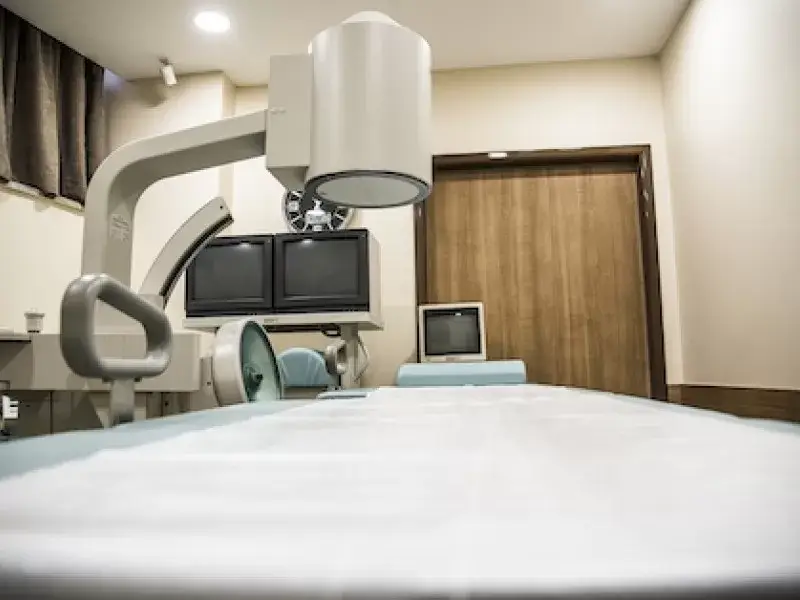
ESWL (Extracorporeal Shock Wave Lithotripsy) refers to breaking stones using shock waves applied externally to the body. The discovery of this technology dates back to the 1980s. ESWL was widely used during the 1980s and 1990s; however, due to advances in minimally invasive surgical techniques in recent years, its area of use has become somewhat more limited. ESWL is a suitable and effective treatment method for approximately 90% of urinary system stones.
What is Shock Wave Lithotripsy (ESWL)?
ESWL (Extracorporeal Shock Wave Lithotripsy) refers to breaking stones using shock waves applied externally to the body. The discovery of this technology dates back to the 1980s. ESWL was widely used during the 1980s and 1990s; however, due to advances in minimally invasive surgical techniques in recent years, its area of use has become somewhat more limited. ESWL is a suitable and effective treatment method for approximately 90% of urinary system stones.
There are three types of ESWL devices according to the energy source generating the shock waves: electrohydraulic, piezoelectric, and electromagnetic. There is no significant difference between these devices in terms of stone fragmentation success. In terms of stone targeting and imaging, there are two types of systems: fluoroscopic (X-ray) and ultrasonographic devices. Fluoroscopic systems are the most commonly used for this purpose. Ultrasonographic devices are more suitable for radiolucent stones that cannot be visualized on X-ray.
The ESWL device consists of three main parts: a table on which the patient lies, a generator, a water cushion through which the sound waves enter the body from the skin, and an X-ray or ultrasound system used to focus on the stone. With the ESWL method, sound waves entering the body through the skin break the stone into small fragments, and these very small fragments are then naturally expelled from the body through the urinary tract. During the procedure, sound waves generated by the device are transmitted through the patient’s skin to the targeted stone. The sound waves are produced at a specific frequency per minute, and the frequency may be increased during the procedure. The treatment usually lasts between 20 and 45 minutes, and additional sessions may sometimes be required.
If the stone is large, several treatment sessions may be necessary to completely fragment it. More than three ESWL sessions are generally not recommended. Hospitalization after the procedure is not necessary. The success rate is not 100%; depending on the size and location of the stone, the success rate for stones smaller than 1 cm is approximately 60–90%.
Situations Where ESWL Is the First Treatment Choice
ESWL is considered the first treatment option in the following situations:
- Kidney stones smaller than 2 cm, especially those close to 1 cm
- Residual kidney stones remaining after percutaneous or open surgery
- Upper ureteral stones and some stones located in other parts of the ureter
However, ESWL may also be used alone or in combination with other treatment techniques for many different types of stones.
ESWL may also be applied to stones located in the lower ureter. However, considering the difficulty of focusing on stones in this region and the possibility that the stone may not fragment successfully, ureterorenoscopic treatment is generally considered a more appropriate option.
If ESWL is used for kidney stones 2 cm or larger, both the number of treatment sessions and the risk of fragmented stones obstructing the kidney increase significantly. Therefore, percutaneous nephrolithotomy (used for stones larger than 3 cm) is generally considered a more suitable option.
Stones measuring 1–2 cm located within the kidney, especially in the lower pole of the kidney, remain controversial in terms of treatment approach. ESWL and flexible ureteroscopic procedures (performed through the urinary tract), or a combination of these methods, are suitable treatment options for such stones.
ESWL in Children
Shock wave lithotripsy (ESWL) can also be successfully performed in children with kidney and ureteral stones. Children are generally able to pass stone fragments more easily than adults after the procedure. The primary concern in pediatric patients is the need for anesthesia during the procedure. To prevent pain and minimize movement that could interfere with stone targeting, children are usually given mild anesthesia during treatment.
As in adults, ESWL is an appropriate treatment method for kidney stones smaller than 2 cm and ureteral stones smaller than 1 cm in children.
Situations Where ESWL Should Not Be Performed (Contraindications)
ESWL is not recommended in the following situations:
- Active urinary tract infection
- Pregnancy
- Uncontrolled high blood pressure
- Use of blood-thinning medications
- Bleeding disorders
- Structural obstruction in the urinary tract that may prevent passage of fragmented stones
- Aneurysm (balloon-like enlargement) of the aorta
In some special cases, ESWL may not be recommended because stone hardness and stone location within the kidney affect treatment success. Stones with high density (>1000 HU) on computed tomography are generally resistant to ESWL treatment. Similarly, ESWL is not recommended when stones are located in the lower calyx of the kidney and there is an anatomical condition preventing fragmented stones from being expelled from that area.
Complications of ESWL
The fragmented stones produced during ESWL are expelled from the body through the urinary tract. Particularly in the lower calyx of the kidney, stone fragments may remain trapped and not be expelled. These residual fragments may serve as a basis for future stone formation, and small fragments may enlarge over time (21–59%).
During passage of the stone fragments, patients may experience pain (renal colic). The fragments may line up throughout the ureter and obstruct the urinary tract. This condition is known as a “stone street” and is treated according to the severity of the obstruction.
The shock waves transmitted from the skin to the stone during the procedure may also affect the kidney and surrounding tissues. Side effects ranging from mild to severe bleeding in the kidney may occur (<1–19%). Rarely, damage to surrounding tissues may also develop.
In patients with heart disease, ESWL may cause cardiac rhythm disturbances (11–59%). The procedure can still be performed in patients with pacemakers if the necessary precautions are taken.
Although some publications suggest that more than three treatment sessions or exposure to more than 40 shock waves in total may contribute to long-term permanent hypertension, this has not been definitively proven. For this reason, more than three ESWL sessions are generally not recommended.
The information here is for general education only and is not medical advice. Please consult your physician for personalized treatment.