









Peyronie’s Disease
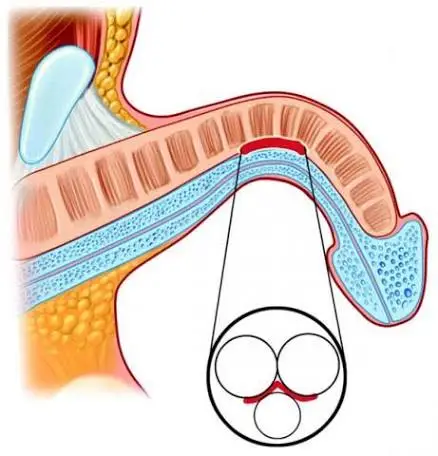
Peyronie's disease (discovered in 1743 by Francois Gigot de za Peyronie) is the formation of cartilaginous-hard plaques in the membranes and sheaths of the penis, causing bending and angulation. In other words, it is the bending of the penis to one side during erection. Also known as penile calcification, Peyronie's disease is famously associated with former US President Bill Clinton. It is a chronic condition that affects psychological, physical, and quality of life. It affects approximately 3-9% of adult men. The actual prevalence is thought to be higher, as some patients are embarrassed to seek medical attention. While it occurs between the ages of 15 and 80, 65% of patients are between 40 and 60 years old.
What is Peyroni's Disease?
Peyronie's disease (discovered in 1743 by Francois Gigot de za Peyronie) is the formation of cartilaginous-hard plaques in the membranes and sheaths of the penis, causing bending and angulation. In other words, it is the bending of the penis to one side during erection. Also known as penile calcification, Peyronie's disease is famously associated with former US President Bill Clinton. It is a chronic condition that affects psychological, physical, and quality of life. It affects approximately 3-9% of adult men. The actual prevalence is thought to be higher, as some patients are embarrassed to seek medical attention. While it occurs between the ages of 15 and 80, 65% of patients are between 40 and 60 years old.
Distribution of Peyroni's disease according to age groups;
- 1.5% of those aged 30-39.
- 3% in the 40-49 and 50-59 age groups,
- 4% of those aged 60-69,
- This figure was found to be 6.5% for those over 70 years old.
- In men with prostate cancer, this rate was found to be 8.9%.
Causes of Peyroni's Disease
The exact cause and mechanism of development are not clearly known. However, genetic predisposition and/or abnormalities in the individual's immune system (autoimmunity), trauma and microtrauma, and inflammation are implicated. .
Trauma:One known cause of Peyronie's disease is minor trauma during sexual intercourse. It is suggested that these traumas cause small blood vessel ruptures, which then transform into scar tissue as they heal. The disease develops within the tunica albuginea, a thick, healthy tissue surrounding the penis. Bleeding into this membrane triggers certain reactions (fibrinogen activation, and the migration of inflammatory cells such as macrophages, neutrophils, and mast cells, as well as platelets, to the area). Inflammation in the trauma area releases mediators such as cytokines, autacoids, vasoactive factors, serotonin, and platelet-derived growth factors, leading to scarring (fibrosis). Due to the avascular nature of the tunica albuginea, these mediators are not removed from the area. Increased or decreased function of metalloproteinases, enzymes involved in the shaping of extracellular proteins, is also thought to play a role in Peyronie's disease. In fact, most patients with Peyronie's disease do not report a history of sexual trauma. Therefore, a hereditary (genetically transmitted) predisposition is suspected along with trauma.
Genetic Predisposition:Genetic predisposition is thought to play a role in the development of Peyronie's disease. In 2% of patients, other male family members also have the same condition. Peyronie's disease is present in 16-20% of individuals with Dupuytren's disease, which is characterized by increased scar tissue in the hands. Paget's disease, affecting the bones, is associated with Peyronie's disease. In short, trauma and a compromised immune system are considered among the possible causes.
Arteriosclerosis: Vasculitis seen in the early stages of atherosclerosis is thought to be related to Peyronie's disease. It is believed that premature aging of the interstitial tissues in the vessels increases their susceptibility to minor trauma.
The prevalence rates of certain diseases found in men with Peyronie's disease are as follows:
- 26% of them have diabetes.
- 24% have high cholesterol,
- 18% of them have high blood pressure.
- 12% had high blood lipid levels and
- Ischemic heart disease was observed in 8.5% of them.
Symptoms
Patients typically present with complaints of a hard plaque-nodule or area on the shaft of the penis, deformity of the penis both during and without erection, pain in the penis during erection, shortening of the penis length with or without erection, and erectile dysfunction.
Physical Examination:In Peyronie's disease, a hard area or plaque is palpated on the penis during examination, but 38-62% of patients are unaware of this hard area. Most plaques are located on the surface of the penis facing the body, and the curvature is upward. Patients with curvature up to 45 degrees often do not significantly hinder sexual intercourse. Plaques on the side or underside of the penis are rarer, and because they cause curvature outside the natural erection angle, patients have more difficulty having intercourse. In patients with plaques on opposite sides of the penis, although the curvature is not very pronounced, shortening of the penis length is more prominent.
In 20-25% of people with Peyronie's disease, calcification occurs in the plaques/lesions, indicating that the disease has become chronic. While non-surgical treatments are generally considered unsuccessful once calcification develops, sometimes a plaque size of 1-2 cm is considered for surgery. Plaque calcification does not significantly increase the degree of curvature, but it is a major cause of painful erections. Pain may occur during the acute, inflammatory phase of the disease, but it is generally not very severe, occurs only during erection, and can negatively affect sexual function. Some patients experience pain during nocturnal erections. The pain usually disappears after the inflammatory phase or at the latest after 18 months.
The cause of erectile dysfunction (impotence) in Peyronie's disease is not yet fully understood, and it occurs in 58% of patients. Factors affecting erectile dysfunction in Peyronie's disease include psychological factors, penile deformities and scar tissue formation (fibrosis), accompanying vascular diseases, and venous insufficiency of the penis. Venous insufficiency (venous leakage) occurs due to the reduced adaptation (incomplete accompaniment) of the penile membrane (tunica albuginea) to the erectile function caused by Peyronie's plaques/nodules, thus reducing the pressure applied to the penile veins.
Course-Clinical Course
Peyroni's disease generally has two stages.
- An active initial phase: In the active initial phase, erections are generally painful, and deformities such as curvature, shortening, and shape distortion of the penis develop. Treatment is somewhat effective during this phase. If treatment is not given during this phase, the disease progresses in almost half of the patients. Therefore, it is important for patients to receive treatment during the active phase, and this allows them to overcome the disease with minimal damage. In one-third of patients, a sudden, painless deformity develops. This phase lasts 6-18 months in patients, and 10-15% of patients resolve spontaneously without treatment.
- Second silent phase: In this second silent phase, the acute phase of the condition has ended, there is no further progression, calcification may occur in the lesions, deformities in the penis such as curvature and shortening have resolved, and painful erections, if any, improve. However, surgeries and interventions to correct deformities can still be performed during this phase.
Diagnosis
Diagnosis is made based on the patient's history and penile examination. The key point in the history is to inquire about when the symptoms began, when the penile deformity, pain during intercourse (if any), and erectile dysfunction started. During the penile examination, the location and degree of hardness of plaque or hard tissue should be recorded. Ideally, penile curvature should be assessed during erection; this may require the use of erection-inducing medications or devices such as a vacuum pump, or the patient can take a photograph of their penis during erection at home. In almost all patients with Peyronie's disease, penile length is shortened, so penis length should be measured during erection. Erectile dysfunction (impotence) is common in those with Peyronie's disease. To assess impotence, a detailed history should be taken, and patients should answer the International Erectile Function Questionnaire (IIEF). If erectile dysfunction is present, penile Doppler ultrasonography to evaluate the vascular structures of the penis is beneficial.
TREATMENT
Because the exact cause is unknown, treatment is limited. Evaluation, treatment, and follow-up of these patients are carried out in specific sequences. Treatment varies depending on whether the disease is in the acute or chronic phase, the severity of the patient's symptoms, and the presence or absence of erectile dysfunction. Patients in the acute phase or those with painful erections are given oral medications or minor interventional treatments. The aim of these treatments is to prevent further plaque growth, reduce disease progression, and minimize penile deformity. These treatments can also be used in chronic patients who are psychologically unprepared for or unwilling to undergo surgery. These treatments include oral medications, electromotive or direct injections of drugs into the affected tissue and lesions, mechanical stretching or vacuum device use, and shock wave therapy (ESWT). It should be emphasized that most of these treatments do not have a high degree of recommendation and are not evidence-based.
Oral medications for the treatment of Peyronie's disease:Oral medications can provide 30-40% improvement in the initial, or acute, phase of the disease. The goal is to prevent disease progression and reduce pain while preserving erectile function.
These medications:
- Vitamin E,
- Potaba (potasyum paraaminobenzoat)
- colchicine,
- tamoxifen,
- drugs like pentoxifyllin
- PD5 Inhibitors: For patients with Peyronie's disease who also have erectile dysfunction, PD5 inhibitors or intracavernous injections.
Shock wave therapy (ESWT) on plaque:This method, which has been applied especially in recent years, aims to remove free oxygen radicals by creating new blood vessels around the plaque. Urology guidelines recommend it as the first option in the first six months, especially in the presence of pain. Applying focused shock waves to hard plaques is a painless procedure and provides promising results.
Electromotive drug delivery into the lesion / Iontophoresis:This treatment involves applying verapamil or verapamil + dexamethasone topically to the skin using electrophoresis or electro-osmosis with the help of high heat or current to increase absorption. The treatment is applied 2-4 times a week for 2-3 months and has few side effects.
Direct injection therapy into the lesion:The most commonly used method is cortisone injection into the hard tissue or plaque, but this has not been very successful. Besides cortisone, verapamil, nicardipine, interferon alpha-2b, and most recently, collagenase clostridium histolyticum (CCH) injections have been tried. Among these, verapamil is a calcium channel blocker that increases collagenase activity, which destroys fibrous tissue. Although studies suggest that injection into the plaque or fibrous tissue reduces pain, decreases curvature, and corrects erectile dysfunction, it has been found that weekly injections of 10 mg verapamil into the plaque for 6 months reduced plaque volume but did not correct penile deformity. Nicardipine, another calcium channel blocker, has been tried and found to be beneficial. Interferon has also been tried with intraplaque injection, but it has not shown a significant advantage over drug therapy.
Injection of collagenase Clostridium histolitikum (CCH) into the plaque:In the treatment of Peyronie's disease, especially for patients with penile curvature greater than 30 degrees, the collagenase Clostridium histolyticum (CCH) has been found to be the most successful among the drugs used for intralesion injections. Its use has proven to be effective, safe, and well-tolerated. The procedure involves two intraplaque injections at 24-72 hour intervals, followed by penile stretching exercises. After four treatment cycles, a 34% improvement in penile curvature has been observed. The procedure should only be performed by trained professionals.
Shockwave Therapy (ESWT):ESWT stands for shockwave therapy, also known as acoustic wave therapy. The shockwave device produces small shock waves that can pass through our tissues to promote healing. In urology, shockwave therapy is frequently and safely used for erectile dysfunction, flaccid penis, Peyronie's disease, chronic prostatitis, painful bladder syndrome, and other urological diseases. The acoustic and energy vibrations that penetrate the tissues with shockwave therapy promote the formation of new blood vessels, ultimately increasing tissue nourishment and blood circulation (perfusion). As a result, 6 sessions of shockwave therapy applied to hardened Peyronie's plaques in the penis partially break down the fibers in these hardened tissues, increase blood circulation, partially reduce penile curvature, and prevent further curvature. It is also known to eliminate pain during erection and positively affect the quality of erection.
Surgical Methods:Severe penile curvature should be considered in patients with hourglass-shaped deformities that impair sexual function. Surgery may be considered for patients who do not benefit from minor interventional treatments, continue to experience erectile dysfunction, and desire a quick solution. The aim of surgical treatment is to correct the penile deformity, restore and maintain erectile function, and preserve penile length and diameter. The surgical method may vary depending on the size and location of the hard tissue (plaque), the degree of penile curvature, and whether or not erectile function was present before treatment. Before surgery, the patient should be thoroughly informed of their post-operative expectations, and it should be stated that a complete return to the pre-operative state is not possible. Surgical methods include shortening or lengthening the tunica albuginea (penis membrane), which surrounds the vascular tissue responsible for erection and gives the penis its shape, and the insertion of a penile prosthesis.
Abbreviation of TunicaThis procedure should be preferred if sufficient erectile function is present with or without medication, the penis length is adequate, the curvature is less than 60 degrees, the curvature is at the tip, and the postoperative shortening does not exceed 20% of the penis length. During the operation, the curvature is corrected by shortening the penis directly opposite the area of erection tissue, by the same amount as the erection tissue. Patient satisfaction ranges from 72% to 100%.
The procedures include removing hardened tissue and replacing it with a graft, or incising it and reinforcing it with a graft:These procedures are preferred in patients with large plaques, curvature exceeding 60 degrees, hourglass-shaped deformities, or short penis length, provided there is adequate erectile function with or without medication. The affected hardened tissue is removed and replaced with a graft. Complete removal of the plaque is not recommended as it can lead to venous insufficiency and consequently erectile dysfunction. The graft can be made from tissue obtained from the patient's own body or from another person or living organism. Synthetic grafts are not preferred due to the risk of infection. Patient satisfaction after these operations ranges from 35% to 93%. After these procedures, patients are given penile stretching exercises or medication to achieve an erection and maintain the elasticity of the grafted tissue.
Traction device:It has been shown that gradual traction of the tissue with devices such as penile extenders causes collagenase activation in the plaque/lesion. Although it is claimed that after 2–8 hours of traction for 6 months, a reduction in curvature (30 degrees) is observed in 30% of patients and an improvement in erection score in 50% of patients, there is no proven evidence.
Vacuum device:In Peyronie's disease, its use is based on the same principle and serves the same purpose as traction devices. It is claimed that using it twice a day (for 10 minutes) for 12 weeks results in an average increase in penis length of 0.5 cm and a 67% reduction in curvature, but this information requires proof.
Penile prostheses:Inflatable penile prostheses may be recommended for Peyronie's disease patients whose erectile dysfunction cannot be resolved with medication. Inflatable prostheses are more successful in correcting penile curvature than flexible prostheses. If the degree of curvature is still greater than 30 degrees after prosthesis implantation, the rigid tissues are surgically incised to reduce the curvature. If excessive opening remains in the tissue after incision, a patching operation is also performed along with the prosthesis operation. The success rate of the treatment is between 84-100%.
The information here is for general education only and is not medical advice. Please consult your physician for personalized treatment.