









Varicocele
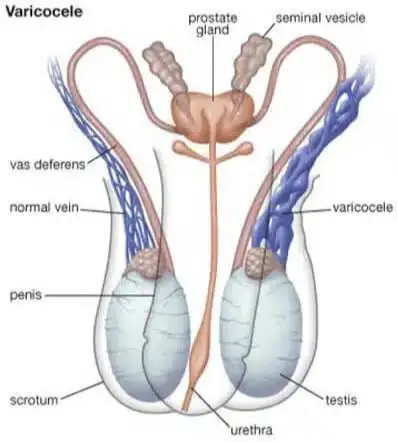
Varicocele is a condition in which the venous vessels carrying deoxygenated blood from the testicles become abnormally enlarged, unable to carry the blood within them, resulting in backflow.
What is varicocele?
Varicocele is a condition in which the venous vessels carrying deoxygenated blood from the testicles become abnormally enlarged, unable to carry the blood within them, resulting in backflow. These vessels carry blood that is deficient in oxygen and nutrients from the testicles. The backflow in the enlarged vessels causes swelling in the testicles, and the expected perfusion and healthy nutrition do not occur. Varicocele is a dilation of veins similar to varicose veins in the legs. Varicocele is common in pre-puberty and adolescents, but rare in boys under 10 years of age. It is found in approximately 15% of adult males. It is most often found on the left side, but rarely can develop on the right or both sides. In cases of varicocele on the right side, attention should be paid to masses in the abdomen that may be pressing on the veins. Varicocele can sometimes present as a symptom of a tumor (kidney tumor). In this case, it is investigated with ultrasonography, and if that is not possible, more detailed examination is performed with computed tomography or MRI imaging. Varicoceles usually do not cause symptoms and are painless, and often do not require treatment.
Varicocele is the most common cause of infertility in men. In the general population, it affects 15% of men, and approximately 35-40% of men seeking treatment for infertility (24% in the 19-35 age group, 48% in those over 40) are diagnosed with varicocele. Treatment is surgical. Success rates are higher, especially with microsurgical techniques. Following treatment, in a clinical study I conducted, approximately 38% of couples conceived naturally, while this rate dropped to 20% in those who did not undergo varicocele surgery. Early treatment can help produce healthier sperm and even enlarge a testicle that has shrunk due to adolescent varicocele.
A multicenter (meta-analysis) study showed that men found to have varicoceles during examination had approximately three times the chance of fathering children if they underwent surgery compared to those who did not. This rate is known to increase even further, particularly as sperm counts deteriorated.
What causes varicocele?
While the exact cause of varicoceles is unknown, varicoceles are a structural abnormality and may develop due to various reasons.
- This may have been due to insufficient development of the valves within the blood vessels.
- High blood pressure, particularly in the veins of the left testicle, can also cause this.
- This phenomenon, which we call "nutcracker," may also be related to the compression of veins exiting the testicles between larger vessels.
- In puberty, situations where blood flow to the testicles is greater than the blood flow out of the testicles can handle are also considered responsible for the development of varicocele. In other words, it may be associated with rapid genital growth in young men.
- However, in cases of varicocele that occurs particularly on the right side, there may also be masses in the abdomen that are causing pressure.
Varicocele and its effects on sperm quality.
Varicocele is detected in 25% of patients with abnormal sperm parameters. Of these, 35-55% have abnormal sperm parameters. The higher the degree of varicocele, the more abnormal the sperm parameters become; at grade 3, this rate can reach 54%. While the negative effects of varicocele on sperm parameters and infertility are still not entirely clear, a multifactorial mechanism is suspected, including oxidative stress, increased heat, reflux of harmful substances (metabolites) from the kidneys and adrenal glands, hormonal imbalance, and hypoxia (oxygen deficiency).
At the heart of these negative effects is oxidative stress. As the degree of varicocele increases, the oxidative stress load also increases, and this stress disappears after successful surgery. Oxidative stress associated with varicocele causes DNA damage and has been shown to cause miscarriages and genetic disorders during pregnancy. DNA damage is assessed using the DNA fragmentation index..
Sperm quality and production may be impaired as a result of one or more of the following reasons:
- Stasis caused by the pressure exerted by deoxygenated blood flowing backward into the testicle, resulting in decreased oxygen levels.
- A dysfunction developing in the Leydig cells, which secrete the male sex hormone (male hormone) in the testes.
- A disruption in the development of sperm cells.
- The backward flow of blood, along with dirty blood containing toxic substances from the kidneys and adrenal glands, back into the testicles.
- Increased testicular temperature (normally the testicles function at a temperature 2 to 3 degrees lower than body temperature within the scrotum; an increase in this temperature can impair sperm production).
- Disruptions in the secretion of gonadotropin and androgen hormones.
- A disruption in communication between sperm cells and the surrounding tissue layers (lamina propria, extracellular matrix, germinal epithelium).
- Nitric oxide (NO), which accumulates in enlarged veins, can impair reproductive function in men with varicoceles, preventing them from having children.
- The affected testicle shrinks (atrophies). The testicle consists of numerous tubules that produce sperm. In varicocele, these tubules are damaged, causing the testicle to shrink and soften. While the exact cause of testicular shrinkage is unclear, pressure from venous blood (deoxygenated blood) accumulation is a possible contributing factor.
Symptoms
Varicoceles usually do not cause symptoms. In some cases, there may be pain ranging in intensity from dull to sharp. The pain increases with standing and exertion, persists throughout the day, and is relieved when lying on the back. The patient may notice the varicocele themselves, or it may be detected by parents or a doctor during a routine physical examination or, in older patients, during an infertility evaluation.
Diagnosis and Grading of Varicocele
The gold standard for diagnosing varicocele is physical examination. A detailed medical history and any symptoms are helpful in the diagnosis. Varicocele is diagnosed through clinical examination. Ultrasound and Doppler ultrasound are helpful in some cases, especially in detecting and quantifying reflux. Manual examination is performed in an optimally warm environment with the patient standing. During this process, straining (Valsalva maneuver) is used to try to feel any dilatations in the veins that are not visible to the naked eye.
Based on examination findings, varicoceles are classified into 3 degrees:
- Grade I: These are mild varicoceles that are only noticeable with straining.
- Grade II: Moderate varicocele, detectable only through physical examination during normal breathing.
- Grade III: Large varicoceles that can be felt by hand and even seen with the naked eye at rest.
Physical Examination:During a physical examination, varicose veins that become visible while standing and/or straining are diagnostic. Swollen veins may feel like a "bag full of worms." Both testicles should be examined together to compare their sizes. The testicle affected by the varicocele is usually smaller. During the examination, the veins are first checked in a supine position. The veins are then drained backward, and immediately afterwards, the patient is asked to stand up, and the degree to which the drained veins fill with blood is checked. Changes in the veins at this stage are graded according to the scale above. The larger the varicocele, the greater the benefit of treatment.
Doppler ultrasonographic examination:Doppler ultrasound examination for varicocele is requested in some cases. It may be necessary, especially in men with small scrotums, those who cannot be properly assessed due to increased fat tissue, or those who have previously undergone surgery and are now coming for a follow-up. However, manual examination is still the primary method of diagnosis. Doppler USG is also used in cases where semen parameters have not improved sufficiently after varicocele surgery, in patients with suspected failed or recurrent surgery, and in the follow-up of adolescent varicocele.
Doppler ultrasound is used to confirm the diagnosis of varicocele by measuring vein diameters (3mm and above) at rest or when the patient strains, and by assessing reflux (reflux lasting more than 2 seconds). Patients with large veins (3mm diameter) and reflux lasting more than 2 seconds benefit from surgery. Patients with reflux show greater improvement in postoperative parameters compared to those without reflux (136% vs. 61%).
Adolescent Varicocele
Adolescent varicocele is a type of varicocele that occurs in adolescence (ages 11-16) and can cause symptoms such as pain in the scrotum, testicular atrophy (shrinkage), and impaired sperm count in adulthood, potentially leading to infertility. Most varicocele cases in childhood and adolescence are asymptomatic. They are usually detected incidentally during a physical examination or noticed by family members.
Physical examination reveals volume loss in the affected testicle in approximately 10% of cases. The incidence of adolescent varicocele is 15%, but it increases with age after 13, when growth accelerates. Left varicocele is seen in 90% of cases, while bilateral varicocele is detected in approximately 10%. Testicular volume is also measured during the evaluation of adolescent varicocele. Measuring testicular volume is necessary for determining the need for varicocele treatment and monitoring testicular volume after varicocelectomy. Testicular volumes can be measured using various volume meters (orchidometers) as well as ultrasonography.
The primary goal in treating adolescent varicocele is to prevent infertility, ensure optimal hormone production, and preserve testicular volume. Surgery is recommended if there is a 20% reduction in testicular volume, a difference of more than 2-3 ml between the two testicles, and/or deterioration in sperm parameters. Following surgery, the testicles regain their normal volume in 50% to 80% of cases, and significant improvements in sperm parameters are achieved. Studies have shown that when adolescent varicocele is treated, the chance of fatherhood in the future is 2-3 times higher compared to those who do not receive treatment. Furthermore, those treated in childhood have a lower rate of miscarriage in future pregnancies compared to those who did not receive treatment.
TREATMENT
The only treatment for varicocele is surgery, but not all patients will benefit from it. Varicocele surgery is primarily recommended for patients with infertility who have a varicocele and impaired sperm parameters. Other potential candidates include those experiencing pain that significantly impacts daily life, those with varicocele in adolescence with more than 20% reduction in the size of the testicles (2-3cc), those who engage in strenuous physical activity or exercise, those for whom varicocele is expected to progress, and those with cosmetic concerns.
It is advisable to wait at least a few months after varicocele surgery to evaluate the results. This is because the development of new sperm and the effects of the surgery become apparent in approximately 3 months. After varicocelectomy, sperm parameters show an average increase of 12 million sperm per cubic millimeter, an average 10% increase in motility, and a 3-5% increase in morphology (sperm structure). The spontaneous pregnancy rate increases 2.5 times after this surgery, or a pregnancy rate of 30-40% can be achieved in those who undergo this surgery due to infertility.
In azoospermic patients with no sperm, it has been found that if varicocele is treated, the probability of finding sperm using the TESE method for IVF (microinjection-AVF) increases (2-3 times) and the chance of pregnancy increases (2 times), and if pregnancy occurs, the miscarriage rate (live birth rate decreases by 2 times).
In patients with unsuccessful IVF attempts and TESE procedures, as well as those with varicoceles who experience DNA damage (DNA fragmentation index above 20%) and low testosterone (hypogonadism), varicocele surgery can benefit. On average, it leads to an increase of approximately 100 ng per ml of total testosterone, while improvements in sexual desire and other symptoms related to low testosterone (hypogonadism) are observed.
Surgery
In this surgical procedure, the enlarged veins (testicular vein, cremasteric-external testicular veins, and partly the vasal veins) are ligated through a small surgical incision in the groin. This redirects deoxygenated blood to healthier veins, causing the varicose veins to atrophy and disappear over time.
Microsurgery:Performing the surgical procedure under a microscope—microsurgical techniques—is the preferred method for achieving more effective results and minimizing potential complications. This method preserves lymphatic vessels that are invisible to the naked eye, reducing the risk of complications and ensuring unimpeded lymphatic flow.
Laparoscopic:Varicocelectomy can also be performed laparoscopically, and the results are similar.
Angiographic Obstruction:Less frequently, a procedure called angiographic occlusion is used in the treatment of varicocele. A special sclerosing agent is injected into the varicose veins, causing the veins to precipitate and form a plug. Anesthesia is not required, but there is radiation exposure.
Recurrent Varicocele
As previously mentioned, if the procedure is not performed with the appropriate method and precision, and if both the external and internal spermatic veins are not ligated, satisfactory results cannot be obtained in varicocele surgery. We call this persistent or recurrent varicocele. This condition can also stem from certain congenital anatomical vascular variations. When performed correctly, recurrence occurs at a minimum rate of 1% with microsurgical techniques, while this rate is 2-7% with other techniques. For the evaluation of recurrent varicocele, the absence of improvement in sperm parameters within 6-10 months after surgery, inability to achieve pregnancy, continued testicular developmental delay, and persistence of pain and low testosterone levels are findings that suggest recurrent varicocele. Physical examination and especially Doppler ultrasound are used in the diagnosis of recurrent varicocele. The expected results from recurrent varicocele surgery are the same as those expected from the first surgery. Again, as with primary varicocele, the use of microsurgical techniques is recommended.
Complications of the surgery:
Recurrence is possible. However, if performed with microsurgical techniques, the recurrence rate is very low; 1%. Hydrocele, which is the accumulation of fluid around the testicle, has also been drastically reduced after surgeries performed with microsurgical techniques; 0.4%. Injury to the testicular arteries, nerves, and lymphatic vessels, and consequent testicular loss and decreased testicular function, can occur, although rarely. These complications are not expected with microsurgical techniques. Apart from these, rare problems such as testicular inflammation, bleeding, hematoma, and complications related to anesthesia may develop, but they can be corrected with appropriate treatment.
After the surgery
You can return to normal daily activities after 2 days. If you are not uncomfortable, you can return to more strenuous activities like exercise after 2-4 weeks. Pain from this surgery is usually mild, but it may persist for a few days or weeks. Your doctor may prescribe pain medication for a limited time after the surgery. After that, your doctor may recommend that you take over-the-counter medications such as acetaminophen or ibuprofen. Wearing tight underwear or a jockstrap can also help by relieving pressure on the testicles. A healthy and natural diet, exercise, weight control, and quitting smoking, if applicable, are recommended.
After surgery, oxidative stress, the underlying disorder caused by varicocele, improves; however, to correct these conditions more quickly and increase the body's antioxidant capacity, medications containing a combination of antioxidants (zinc, phallic acid, L-carnitine, coenzyme-Q10, B12, cysteine, and arginine) can be used. Additional antioxidant treatment is claimed to alleviate some of the negative effects stemming from DNA damage. It is recommended that these empirical mixtures be used for at least 3 months. Improvements in sperm quality are greater and occur earlier in those taking these medications after varicocele surgery. However, no difference has been found in pregnancy rates.
The information here is for general education only and is not medical advice. Please consult your physician for personalized treatment.