









Micro TESE
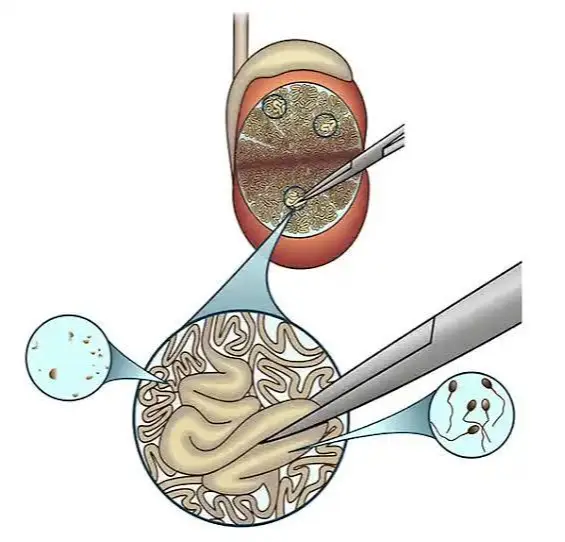
Micro TESE is an advanced surgical technique used in the treatment of male infertility. This procedure is especially performed in cases of azoospermia, which means the absence of sperm in semen. Micro TESE is a procedure performed under a microscope to obtain sperm directly from the testicles. The aim of the procedure is to identify the few seminiferous tubules where sperm production exists and retrieve sperm from these areas.
Micro TESE is an advanced surgical technique used in the treatment of male infertility. This procedure is especially performed in cases of azoospermia, which means the absence of sperm in semen. Micro TESE is a procedure performed under a microscope to obtain sperm directly from the testicles. The aim of the procedure is to identify the few seminiferous tubules where sperm production exists and retrieve sperm from these areas.
Compared to conventional TESE, this method is performed with less tissue damage and offers a higher chance of retrieving sperm. This makes it possible to obtain a sufficient number and quality of sperm for use in IVF treatment. Micro TESE has an important place in the treatment of male infertility and plays a key role in helping many couples achieve their dream of having children.
The technique is successfully performed especially by specialists such as Prof. Dr. Hakkı Perk. The increasing availability of such advanced technological methods in Ankara and other major cities is a promising development in the treatment of male infertility.
Who Is Micro TESE Applied To?
Micro TESE is generally performed on men diagnosed with azoospermia. Azoospermia is the complete absence of sperm cells in semen and is one of the major causes of male infertility. Azoospermia is divided into two types: obstructive and non-obstructive. Obstructive azoospermia results from blockages in the sperm ducts, whereas non-obstructive azoospermia occurs due to sperm production disorders.
This method is preferred in cases where other sperm retrieval techniques from the testicles fail or have low success rates. It also provides an effective solution for men who do not produce sperm due to genetic factors or hormonal imbalances. Micro TESE should not be considered a last-resort method; on the contrary, it is a treatment that should often be preferred from the beginning for many patients.
The treatment process is planned individually and carried out meticulously by a specialized team. In this context, selecting the right patient and having an experienced surgeon are critical factors for treatment success.
How Is Micro TESE Performed?
The Micro TESE procedure is performed under general anesthesia in an operating room environment. During the procedure, the testicular tissue is carefully examined using a microscope, and the areas where sperm production exists are targeted. In this way, more sperm can be retrieved with less tissue damage.
The first step involves making a small incision in the scrotum to access the testicles. Under the microscope, the seminiferous tubules are examined in detail, and the tubules most likely to contain sperm are sampled. These tissue samples are then evaluated in a laboratory environment, and viable sperm cells are isolated.
After the procedure, sutures are placed, and the patient is kept under observation for a short period. One of the most important advantages of Micro TESE compared to conventional methods is that it is less invasive, which speeds up the recovery process. Patients are generally discharged on the same day.
Success Rates of Micro TESE
The success rates of Micro TESE may vary depending on many factors. However, in general, the sperm retrieval rate with this method is significantly higher compared to conventional techniques. Especially in cases of non-obstructive azoospermia, the success rate may reach up to 50%.
Factors affecting success rates include the patient’s age, the type of azoospermia, genetic factors, and previous treatment history. In addition, the surgeon’s experience and the quality of the equipment used also play an important role. Procedures performed by specialists such as Prof. Dr. Hakkı Perk generally result in higher success rates.
High success rates increase patients’ motivation and hope throughout the treatment process. Therefore, it is important for patients to be comprehensively informed before treatment and for their expectations to be managed correctly.
Recovery Process After Micro TESE
The recovery process after Micro TESE is quite short and comfortable compared to other surgical procedures. Patients are generally discharged on the same day and can return to their daily activities within a few days. However, there are some important points to consider during recovery.
First of all, pain and discomfort after the procedure are usually minimal and can be controlled with simple painkillers. Mild swelling or bruising in the scrotum may occur, but this usually resolves on its own within a few days. Patients are advised to limit physical activities and rest for the first couple of days after the procedure.
Carefully following the doctor’s instructions after Micro TESE helps ensure a fast and smooth recovery process. In addition, paying attention to hygiene rules is important to reduce the risk of infection. During recovery, patients are encouraged to attend regular follow-up appointments and seek medical support whenever needed.
The Relationship Between Micro TESE and Male Infertility
Male infertility is one of the most significant barriers preventing couples from having children and may arise from various causes. Micro TESE offers an important treatment option for overcoming such infertility problems. Especially in severe conditions such as azoospermia, this method is an effective solution that increases the chance of having children.
Micro TESE is considered a revolutionary method in the treatment of male infertility. Treating male infertility is not only a physical issue but also involves psychological and emotional challenges. Therefore, the success of methods such as Micro TESE greatly improves couples’ quality of life.
While this process becomes a source of hope for couples on their journey toward parenthood, psychological support is also recommended as part of the treatment. It is important for couples struggling with male infertility to know that they are not alone and to receive professional support throughout the process.
Methods of Retrieving Sperm from the Testicles
Methods of retrieving sperm directly from the testicles have a critical role in the treatment of male infertility. These methods provide the sperm cells necessary for IVF treatment in cases such as azoospermia. Micro TESE is considered one of the most advanced techniques in this field, but other methods are also available.
TESA (Testicular Sperm Aspiration): A procedure in which sperm are aspirated from the testicle using a needle. Although it is a simple and fast method, it may be less successful compared to Micro TESE.
PESA (Percutaneous Epididymal Sperm Aspiration): A technique used to retrieve sperm from the epididymis. It is particularly effective in cases of obstructive azoospermia.
MESA (Microsurgical Epididymal Sperm Aspiration): A method in which sperm are retrieved from the epididymis using a microscope. Similar to Micro TESE, it is performed under microscopic guidance.
These methods are selected and applied according to each patient’s condition. Determining the most suitable method based on the patient’s needs is of great importance for treatment success.
The Process of Microscopic Sperm Retrieval Surgery
Microscopic sperm retrieval surgery is an important stage in the treatment of male infertility, and the Micro TESE procedure is at the center of this process. The surgical procedure is performed under a microscope, and the seminiferous tubules are examined in detail. In this way, the regions where sperm production exists are identified and sperm are retrieved from these areas.
The success of the operation is directly related to the surgeon’s experience and the quality of the microscopic equipment used. During this process, the surgeon’s meticulous work and attention to detail increase the sperm retrieval rates. Compared to other methods, Micro TESE allows for the retrieval of more sperm, which increases the success rate of IVF treatment.
After the operation, the retrieved sperm cells are carefully examined in a laboratory environment. Selecting high-quality and healthy sperm cells is a critical step for the success of IVF treatment. This process is carried out by a specialized team and allows patients to achieve the best possible results.
Male Infertility and Treatment Methods
Male infertility can be a significant obstacle for couples trying to have children. This condition may arise due to various reasons, and treatment methods are shaped accordingly. There are many different approaches to the treatment of male infertility.
Medical Treatments: Medical treatments are preferred in cases such as correcting hormonal imbalances or treating infections.
Surgical Methods: Surgical interventions may be performed to remove blockages or correct conditions such as varicocele.
Assisted Reproductive Technologies (ART): Advanced surgical techniques such as Micro TESE are used to retrieve sperm for IVF treatment.
Male infertility treatment is planned individually, and the most suitable methods are determined for each patient. In this process, the guidance and support of specialist doctors directly affect treatment success. Especially advanced technology-based methods such as Micro TESE offer promising solutions for many couples on their path to parenthood.
The information here is for general education only and is not medical advice. Please consult your physician for personalized treatment.