









Robotic Surgery
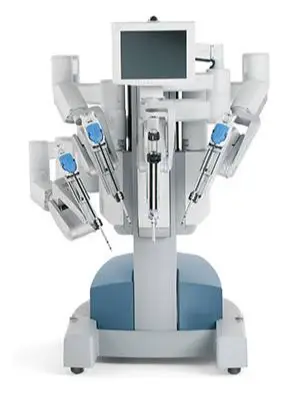
Robot-assisted surgery, known as da Vinci Robotic Surgery or robotic technology, represents the most advanced stage that surgery has reached in modern medicine. It is widely used in major centers in the United States as well as in Türkiye, particularly in urology, gynecology, general surgery, ENT, thoracic surgery, and cardiac surgery procedures. The “da Vinci Robot” technology stands out because of the special advantages it provides for both doctors and patients, and today it is considered one of the most successful surgical methods used worldwide, especially in the fight against cancer.
What Is Robotic Surgery? da Vinci Robotic Surgery
What Is Robotic Surgery?
Robot-assisted surgery, known as da Vinci Robotic Surgery or robotic technology, represents the most advanced stage that surgery has reached in modern medicine. It is widely used in major centers in the United States as well as in Türkiye, particularly in urology, gynecology, general surgery, ENT, thoracic surgery, and cardiac surgery procedures. The “da Vinci Robot” technology stands out because of the special advantages it provides for both doctors and patients, and today it is considered one of the most successful surgical methods used worldwide, especially in the fight against cancer.
Robot-assisted laparoscopic surgery, commonly referred to as “robotic surgery,” has three main characteristics. The first is the imaging system, which works according to the principles of laparoscopic surgery. In other words, images from inside the patient’s body are transmitted to the surgeon through a camera.
Unlike conventional laparoscopic surgery, the image in robotic surgery is three-dimensional, and since the camera is controlled by the robot, the image is stable and free from tremor. By approaching the organ being operated on very closely, highly magnified and clearer images may be obtained. The surgeon controls the robotic arms using a console. These robotic arms are positioned on the patient. Fiberoptic cables in the console transmit the surgeon’s small hand movements to the robotic arms, allowing attached surgical instruments such as scissors, tissue holders, or needle holders to perform the desired movements. Since the surgical instruments attached to the robotic arms can rotate 540 degrees, they may perform movements beyond the natural range of the human hand.
In addition, the natural tremor of the human hand is not reflected at the tips of the surgical instruments in robotic surgery. This minimizes the margin of error. Thanks to both its advanced technological features and ease of use, robotic surgery offers many advantages for both the patient and the surgeon. Compared to open surgery, hospital stay and recovery time are much shorter. Furthermore, since the procedure is performed through only a few small incisions, surgical scarring is minimal. Robotic surgery also provides much easier access to all areas within the pelvic system. The mobility of the instruments used is extremely high. Surgical procedures may be performed more comfortably, efficiently, and rapidly. There is less risk of bleeding, a shorter recovery period, and a lower risk of infection. The advantage of three-dimensional imaging makes the surgeon’s work easier. Since the surgeon operates while seated at a console during surgery, less physical effort is required and concentration is better maintained.
da Vinci Robotic Surgery in Urological Operations
Robotic surgery was first used in cardiovascular surgery in 1994. However, its most widespread application became urological surgery. Since 2001, the da Vinci system has been most commonly used worldwide in prostate cancer and enlarged prostate surgeries, and it is also used in kidney, bladder, and testicular cancer operations.
The “da Vinci Robotic Surgery” technique is not a completely robot-dependent surgical procedure. Whether surgeries are performed using open, laparoscopic, or robotic techniques, the experience of the surgical team remains the most important factor determining surgical success.
Nerve Preservation in Prostate Cancer Surgery
After prostate cancer surgery, especially in men over the age of 50, two major risks that may negatively affect social life are sexual dysfunction and urinary incontinence. In prostate cancer surgeries performed using the “da Vinci Robotic Surgery” technique, these risks that may negatively affect the patient’s quality of life are minimized.
The erection nerves adjacent to the prostate and leading to the penis, as well as the urinary continence muscles, may be preserved much more effectively thanks to robotic technology. With this high-level preservation, the risks of urinary incontinence and erectile dysfunction are minimized. The “Intrafascial Nerve-Sparing” technique used in robotic surgery also minimizes the risk of postoperative sexual activity problems.
Advantages of da Vinci in Prostate Surgery
-
Hospital stay after da Vinci Robotic Surgery is generally only 1–2 days. Approximately 95% of patients are discharged on the second postoperative day.
-
Compared to traditional open surgery, there is minimal blood loss during the operation.
-
Preoperative blood preparation is generally unnecessary.
-
Very little pain medication is needed during hospitalization or after discharge because patients experience minimal pain.
-
The urinary catheter is usually removed within the first postoperative week (approximately 4–6 days). In open surgery, this period is generally 14–21 days.
-
Approximately 90% of patients return to their routine activities by the third week after da Vinci Robotic Surgery.
Kidney Tumor Surgery and Kidney Preservation
In kidney tumor surgeries performed using the “da Vinci” technique, excellent cancer control may be achieved. Only the tumor tissue is removed, while the healthy kidney is preserved. Under magnified, high-resolution three-dimensional imaging provided by robotic technology, the depth of the tumor within the tissue may be accurately assessed and the tumor may be safely removed from the kidney.
The area from which the tumor is removed may then be sutured rapidly and precisely. After the tumor tissue is removed, the resulting tissue cavity, opened vessels, and injured urinary channels are delicately and quickly repaired using robotic arms. In large kidney cancers, the kidney may also be completely removed if necessary.
Advantages of da Vinci in Kidney Surgery
-
Shorter hospital stay and faster recovery
-
Less postoperative pain and reduced need for painkillers
-
Faster return to daily activities
-
Better cosmetic appearance due to smaller incisions
-
Elimination of tremor through robotic arm technology
Testicular Cancer Surgery with Robotic Surgery
With da Vinci Robotic Surgery, minimally invasive testicular cancer surgery may be performed. In traditional open surgery, the abdominal wall is opened from below the breastbone down to the pelvic bone, the intestines are taken out, and lymph nodes around major blood vessels are removed. Using robotic technology, these procedures may now be performed completely through closed surgery techniques.
Large incisions required in open surgery are becoming obsolete thanks to the comfort provided by robotic surgery, offering patients major advantages.
Advantages of Robotic Surgery in Testicular Cancer Operations
-
Pain, infection risk, and wound healing complications associated with large incisions are reduced.
-
Unlike open surgery, the intestines are not removed from the body, eliminating risks such as infection and tissue drying.
-
Certain nerve structures around the aorta and major vessels that affect sexual function may be seen more clearly and preserved more effectively.
-
As a result, fewer problems related to ejaculation occur.
Since chemotherapy may also have long-term side effects, robotic surgery may provide advantages for selected patient groups. Difficulties related to future fertility after surgery may be addressed through sperm banking before surgery and the use of assisted reproductive techniques.
Artificial Bladder Construction from Intestine with the da Vinci Robot
With da Vinci Robotic Surgery, treatment may be performed without creating large surgical incisions in the body. In open bladder cancer surgery, a large incision extending from above the navel down to the pelvic bone is required for bladder and lymph node removal, and the bladder reconstructed from the intestine is connected to the normal urinary tract.
Patients whose bladders are removed may also face social challenges such as carrying an external urine bag or emptying urine using catheters at regular intervals.
In bladder cancer surgeries performed with da Vinci Robotic Surgery, two approaches may be used. In the first, after robotic removal of the bladder and lymph nodes, reconstruction of a new bladder from the intestines is performed using the open method. However, this still requires a large incision and may lead to complications such as infection, tissue drying, fluid loss, and heat loss because the intestines remain outside the body.
In fully robotic surgery, all stages — bladder removal, lymph node dissection, creation of a new bladder from intestinal tissue, connecting the urinary channels to the new bladder, and connecting the bladder to the urinary tract — are completed robotically.
Advantages of Robotic Surgery in Bladder Cancer
-
Avoidance of large surgical incisions
-
Surgery performed through only six small ports measuring 8–15 mm each
-
Elimination of risks such as incision hernias, wound separation, and repeat surgeries
-
Reduced bleeding during surgery
-
Reduced risks of bowel drying, infection, and heat loss because the abdomen is not widely opened
-
Faster recovery and return to normal life
In bladder cancer surgery, the prostate is often removed together with the bladder because prostate cancer may also be present in one-third of bladder cancer patients without their knowledge. During prostate removal, the nerves responsible for sexual function and urinary continence mechanisms may be better preserved due to the magnified and enhanced visualization provided by robotic technology.
Patients undergoing bladder cancer surgery with da Vinci Robotic Surgery generally begin eating on the second or third postoperative day. Once bowel function has adequately returned and recovery proceeds well, discharge usually occurs within one week. After approximately three weeks with a catheter, the catheter is removed once healing of the newly constructed intestinal bladder is confirmed.
In female bladder cancer patients, the uterus and ovaries may also be removed together with the bladder. Since the uterus is removed through the vaginal canal, repair of the vaginal canal may also be performed robotically during the operation.
Robotic Solution for UPJ Obstruction
Conventional laparoscopic surgery has created an important breakthrough in the surgical treatment of ureteropelvic junction (UPJ) obstruction, which is often detected incidentally or due to kidney pain at a young age. While open reconstructive surgery requires a large incision, laparoscopic surgery allows treatment of this narrowing with a 97% success rate through only small openings.
However, conventional laparoscopy has disadvantages such as millimetric tremor, two-dimensional imaging, and limited instrument mobility. With da Vinci Robotic technology, treatment may be performed much more comfortably and successfully under three-dimensional visualization using tremor-free robotic arms with superior mobility.
The Role of Robotic Surgery in Urinary Incontinence
In women, da Vinci Robotic Surgery may be used in cases of urinary incontinence caused by bladder prolapse and even in advanced bladder prolapse cases where the bladder protrudes outside the vaginal canal.
Thanks to robotic technology, the bladder may be repaired with nearly 100% success so that prolapse does not recur. Particularly in sacrocolpopexy operations performed for prolapse, robotic surgery stands out because robotic arms provide the advantage of rapid suturing within the body.
Since prolapse occurs due to weakening of ligaments and supporting tissues, synthetic mesh materials may be used to fully repair the prolapsed tissues. da Vinci Robotic technology offers major advantages during these reconstructive procedures.
Robotic Surgery in Pediatric Urology
The first robotic urological surgery performed in children was pyeloplasty in 2002. Since then, the successful application of robotic pyeloplasty, nephrectomy, heminephrectomy, ureteral reimplantation, and augmentation procedures has increased the popularity of robotic interventions in pediatric urology.
The information here is for general education only and is not medical advice. Please consult your physician for personalized treatment.