









Testicular Torsion
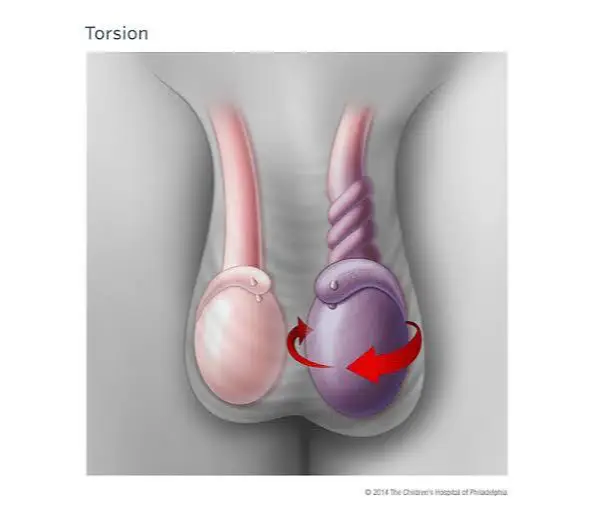
Testicular torsion (twisting of the testicle around itself) is one of the urological emergencies most commonly seen in young males and, if left untreated, may lead to loss of the testicle. The incidence of torsion involving the testicle and all associated structures up to the age of 25 is approximately 1 in 160, while isolated testicular torsion occurs at a rate of about 1 in 4000. Although testicular torsion may occur at any age, it is especially common during adolescence and within the first year of life. Approximately 65% of cases occur during puberty, particularly around the age of 13. Torsion usually affects the left testicle, while bilateral involvement is seen in about 2% of cases.
Testicular torsion (twisting of the testicle around itself) is one of the urological emergencies most commonly seen in young males and, if left untreated, may lead to loss of the testicle. The incidence of torsion involving the testicle and all associated structures up to the age of 25 is approximately 1 in 160, while isolated testicular torsion occurs at a rate of about 1 in 4000. Although testicular torsion may occur at any age, it is especially common during adolescence and within the first year of life. Approximately 65% of cases occur during puberty, particularly around the age of 13. Torsion usually affects the left testicle, while bilateral involvement is seen in about 2% of cases.
Factors That May Cause Testicular Torsion
Because the artery supplying the testicle is one of the longer vessels in the body, it is more vulnerable to trauma. Various predisposing factors have been identified for testicular torsion. Normally, the protective membrane surrounding the testicle covers the front surface of the testicle and ends near the epididymis or spermatic cord. When this membrane ends higher along the cord, the testicle can move freely within the sac, a condition known as the “bell clapper deformity.” Autopsy studies show this abnormality in approximately 12% of individuals, and it is responsible for most torsion cases during adolescence.
In addition, during puberty, the increase in testicular volume occurs more rapidly than the surrounding structures, increasing the likelihood of torsion. About 10% of torsion cases occur during the newborn period. In these cases, the causes include abnormalities in testicular descent into the scrotum and defects in the supporting ligaments of the testicle.
Approximately 25% of patients definitively diagnosed with testicular torsion report a previous history of at least one episode of spontaneous testicular pain that resolved on its own.
Symptoms of Testicular Torsion
One of the most important symptoms of testicular torsion is sudden and severe pain in the affected testicle. Nausea may accompany the pain in approximately 25% of patients. Especially during adolescence, some patients may delay informing their families about their symptoms, which can result in delayed medical consultation.
Diagnosis
Physical examination is extremely important. In the early stage, the cremasteric reflex on the affected side may disappear. Mild redness of the scrotal skin, sudden fluid accumulation between the testicular layers, and darkening of the scrotal skin color may also be observed. Increased pain when the affected testicle is manually elevated toward the body is considered a significant sign suggesting testicular torsion.
In delayed cases, pain may decrease because the testicular tissue has already become nonviable. In addition to physical examination, color Doppler ultrasonography or scintigraphy may be performed to evaluate blood flow to the testicle. Reduced or absent blood flow on these examinations strongly suggests testicular torsion.
Testicular torsion may sometimes be confused with other causes of scrotal pain such as infection, fluid accumulation, inguinal hernia, varicocele, cancer, or trauma.
Course of Testicular Torsion
Testicular torsion is a true urological emergency and requires immediate intervention. Delayed treatment or late presentation to a physician may result in removal of the affected testicle and even infertility. The degree of testicular damage is closely related to both the duration and degree of torsion.
If the torsion exceeds 360° and lasts more than 24 hours, severe shrinkage and permanent loss of the testicle are highly likely. If intervention is performed within the first 4–6 hours, the chance of preserving normal testicular function is very good.
Studies have shown that even in unilateral torsion, damage may occur in both testicles. Although the exact mechanism affecting the opposite testicle is not fully understood, immune system reactions and congenital abnormalities are thought to play a role.
Research has shown that patients whose affected testicle was removed after symptoms had persisted for more than 24 hours may still have normal semen analysis results, whereas patients whose damaged testicle was left in place after this period may demonstrate impaired semen parameters. Therefore, removal of the affected testicle is generally recommended in cases presenting after 24 hours.
Treatment of Testicular Torsion
Testicular torsion is a urological emergency. Once diagnosed, surgical intervention should be performed by a urologist as quickly as possible. The goal of treatment is to preserve testicular function and therefore reproductive function.
The type of surgery depends on the duration of torsion. In general, torsions exceeding 360 degrees may lead to complete loss of testicular function within 24 hours, making removal of the testicle necessary. The final decision is made during surgery.
In patients presenting early, a surgical incision is made through the scrotum, and the twisted testicle is untwisted and restored to its normal position. Because the risk of torsion remains afterward, both testicles are fixed to the scrotum with sutures to prevent recurrence.
Before surgery, application of ice around the scrotum is recommended, as this may help reduce tissue damage caused by impaired blood circulation.
In delayed cases, leaving the damaged testicle in place may harm the opposite testicle. In such situations, treatment usually involves removal of the affected testicle and fixation of the healthy testicle to the scrotum. Despite all interventions, reproductive function may still be impaired.
Duration of Surgery and Hospital Stay
The duration of surgery for testicular torsion varies depending on the surgeon and patient factors and usually ranges from 30 to 70 minutes. Because testicular torsion is an emergency, surgery is performed as soon as possible after the patient arrives at the hospital.
Depending on the patient’s general condition, the type of surgery performed, and the anesthesia used, patients are usually discharged the day after surgery.
Complications of Testicular Torsion Treatment
Depending on the delay before treatment and the type of intervention performed, complications may include fluid accumulation around the testicle, bleeding, infection, and shrinkage of testicular size. In delayed cases, infertility may develop despite surgical intervention.
Additional risks and complications related to anesthesia may also occur, including breathing problems, drug reactions, uncontrolled fever, paralysis or stroke affecting any part of the body, brain pressure complications, and even death.
Important Considerations After Testicular Torsion Treatment
Depending on the type of anesthesia and surgery performed, patients may usually resume normal daily activities after 1–2 days of bed rest at home. Depending on the procedure, return to sexual activity, work, and non-strenuous sports activities may generally be allowed after approximately 2–4 weeks.
The information here is for general education only and is not medical advice. Please consult your physician for personalized treatment.