









Nocturia
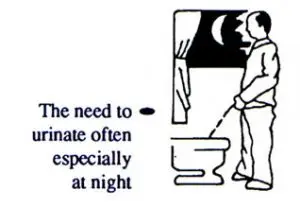
Nocturia, or waking up at night to urinate, is waking up one or more times during sleep due to the need to urinate. Waking up to go to the toilet due to pain, insomnia, noise, or certain psychological problems is not included in this category. Similarly, going to the toilet first thing in the morning is not nocturia. Normally, urine production is reduced by half during sleep due to the hormone ADH secreted in the base of the brain, and there is usually little need to wake up to urinate during a 6-8 hour sleep period.
What is nocturia (the need to get up to urinate at night)?
Nocturia, or waking up at night to urinate, is waking up one or more times during sleep due to the need to urinate. Waking up to go to the toilet due to pain, insomnia, noise, or certain psychological problems is not included in this category. Similarly, going to the toilet first thing in the morning is not nocturia. Normally, urine production is reduced by half during sleep due to the hormone ADH secreted in the base of the brain, and there is usually little need to wake up to urinate during a 6-8 hour sleep period.
Waking up once at night with age can be considered normal, but needing to get up to urinate more often than usual is not normal and should be investigated as a medical condition, especially if accompanied by other complaints. Of course, the bladder is a social organ, and we cannot consider it pathological if someone has developed a lifelong habit of getting up to urinate at night. However, if the need to urinate at night affects your daily quality of life and disrupts your comfort, it is worth investigating. The more frequent the need to urinate at night, the more it disrupts your sleep, leading to increased fatigue during the day, difficulty concentrating on work, and impacting your daily activities and social life. Similarly, people who work night shifts and sleep during the day may experience the need to urinate while sleeping during the day.
Nocturnal urination can occur in both women and men, and its frequency increases with age. It is more common in women under 30 and men over 50. Above 60, it occurs at similar rates in both women and men.
Reasons and types of the need to urinate at night.
Excessive urine production (Polyuria):Polyuria patients produce more than 3 liters of urine in 24 hours. This is usually due to too much water being filtered by the kidneys. Excessive fluid intake can cause dry mouth and lead to increased urine production in certain conditions such as Type 1 or 2 diabetes, primary polydipsia (diabetes insipidus), and gestational diabetes.
Excessive urine production at night (nocturnal polyuria):In nocturnal polyuria, high volumes of urine are produced only at night. However, urine volumes during the day are normal or even reduced. This is usually due to fluid retention caused by edema in the feet or legs during the day. When you lie down to sleep, the negative effect of gravity is removed, and the fluid from the edematous areas returns to your blood vessels and is filtered by your kidneys, causing excessive urine production.
Causes of edema and excess fluid retention:
- Heart failure.
- Chronic kidney failure
- Lower extremity edema (swelling of the legs).
- Sleep disorders such as obstructive sleep apnea (breathing is interrupted or stops many times during sleep).
- Certain medications include diuretics (water pills), cardiac glycosides, demeclocycline, lithium, methoxyflurane, phenytoin, propoxyphen, and excessive vitamin D.
- Drinking too much liquid before bed, especially coffee, caffeinated beverages, or alcohol.
- Eating a meal that is high in salt.
- Decreased production of ADH-vasopressin hormone
Frequent nighttime urination (True Nocturia):Nocturia refers to the need to wake up to urinate at night, even though urine production is normal. The total amount of urine produced is not actually high. This is usually due to the bladder not emptying completely (therefore filling faster) or not filling completely before the urge to urinate develops (low bladder volume). This can also occur due to difficulty sleeping, but it is not considered nocturia.
Reasons why you may not be able to completely empty your bladder:
- Bladder outlet obstruction
- Prostate enlargement
- Prostate Cancer
- Congenital bladder outlet obstruction and urethral stricture
Reasons why the bladder may not be able to store urine completely may include:
- Bladder overactivity (bladder spasms).
- Bladder infection or recurrent urinary tract infection.
- Bladder inflammation (swelling).
- Interstitial cystitis - painful bladder syndrome.
- Bladder cancer.
The need to wake up to urinate at night - diagnosis of nocturia.
Diagnosing nocturia is relatively simple, but understanding the underlying causes is quite complex. Therefore, nocturia can also be a symptom of other potentially serious medical conditions. First, your doctor will review your medical history and perform a physical examination. To better understand your symptoms and their impact on your quality of life, your doctor may ask you to fill out a questionnaire. The most commonly used questionnaire is the "Nocturia-Quality of Life" (N-QoL). They may also have you keep a bladder diary to aid in diagnosis. This is a two-to-three-day record showing how much fluid you drink, how often you go to the toilet, and how much urine you pass (volume in mL). You can easily do this at home using a measuring cup. You can also mention sudden urges to urinate and urinary incontinence. You should also record any medications you take, urinary tract infections, and related symptoms. Your doctor will review the diary to determine possible causes and treatment for your nighttime urination needs.
Your doctor may ask you the following questions:
- When did this situation begin?
- How many times do you urinate each night?
- How much urine do you release when you urinate at night?
- Has there been any change (increase or decrease) in the speed or thickness of your urine stream?
- How much caffeinated coffee do you drink daily?
- Does the need to urinate throughout the night prevent you from getting enough sleep?
- Do you drink alcoholic beverages? How often and how much?
- Has your diet changed recently?
- In addition to reviewing your urination diary, your doctor may order a urine test to examine your urine for infection.
Physical examination:
- Bladder distension (if your bladder isn't emptying completely, it may feel tense and distended)
- Swelling in the ankles and legs (known as peripheral edema)
- Skin damage in your genital area (a sign of urinary incontinence)
- Urethral discharge (sign of infection)
- Abnormalities in the genital area may be examined through a prostate examination in men or a pelvic examination in women, as well as blood pressure measurement and examinations for heart, lung, or neurological conditions.
Treatment of nocturia (the need to urinate at night)
Several suggestions can be made for the treatment of nocturia (the need to urinate at night), with the primary treatment focusing on addressing the underlying cause. In addition, symptomatic/supportive treatments may be recommended. The causes of nocturia, other treatments used, and certain personal preferences all play a role in treatment. Treatment methods include medication and some surgical procedures.
Muscarinic receptor antagonists:Muscarinic receptor antagonists (MRAs) are medications that reduce abnormal bladder contractions. They relieve the urgent need to urinate. They have side effects, which are generally moderate. Dryness in the mouth and eyes, acid reflux, and constipation are common side effects. Rarely, blurred vision, nausea, and difficulty urinating may occur. Long-term antimuscarinic use in older adults has worse side effects.
These antimuscaric drugs:
- Darifenacin
- Fesoterodine
- Oxybutynin
- Propiverine
- Solifenasin
- Tolterodin
- Trospium kloride
Beta-3 receptor agonist-Mirabegron:This medication relaxes your bladder muscles, helping to increase your bladder's capacity to hold urine. Therefore, you will feel less need to urinate. Mirabegron also has some bothersome side effects, but they are fewer than those of antimucarinics and can be used in combination with them. Mirabegron's side effects are generally mild, but long-term side effects are uncertain.
Diuretic drugs (Loop diuretics):In some patients, increased blood circulation in a supine position makes it easier for the heart to pump blood to the kidneys and the entire body. This leads to increased urine production because the kidneys filter more fluid, resulting in nighttime urination. Strong diuretics can be used for this purpose, but side effects such as dehydration, gout, low serum sodium or potassium levels, low blood pressure, and dizziness may occur.
Diuretic medications include the following:
- Furosemide
- Bumetanide
- Torsemide
Desmopressin-ADH:If the reason for nighttime urination is decreased vasopressin-ADH production, it can be used as a replacement medication. If there is excessive nighttime urine production, this medication may be recommended to reduce urine output. Desmopressin can reduce the number of times you wake up to urinate and allow you to sleep uninterrupted for longer hours. It is taken before bedtime as a tablet, nasal spray, or orally disintegrating tablet. It is effective for 8-12 hours. The medication is available in different dosages, and women generally need a lower dose than men. As a side effect, Desmopressin can cause a decrease in blood sodium levels. For this reason, blood tests should be performed before and during treatment.
Less common side effects include headache, diarrhea, nausea, abdominal pain, dizziness, facial flushing, or dry mouth. In rare cases, desmopressin can cause high blood pressure and swelling in the feet and ankles (peripheral edema).
Prostate treatment and surgery:Because of the relationship between the prostate and the bladder, some men are prescribed medications to relax the muscles within the prostate gland or reduce its size. When bladder function is affected, laparoscopic prostatectomy may be recommended to alleviate the symptoms of benign prostatic hyperplasia.
Lifestyle recommendations for nocturia:You can reduce your symptoms and improve your quality of life through general lifestyle changes.
1. Maintain good sleep habits: Go to bed and wake up at the same times every day of the week, and get enough sleep to be active and alert the next day. Staying in bed longer or shorter will disrupt sleep quality; avoid daytime naps; and sleep in a comfortable environment with a good temperature, free from noise and disturbing light.
2. To avoid waking up with the urge to urinate at night, consume less fluids in the late afternoon and evening. Drink at least 1-1.5 liters of water a day and consult your doctor about increasing your water intake.
3. Reduce your alcohol and caffeine intake, as these increase urine output and can stimulate your bladder. Even though they are labeled as decaffeinated, some beverages like tea and coffee may still contain small amounts of caffeine.
4. Avoid heavy meals before bed. Certain foods can worsen nocturia. Reducing spices and chocolate in the evening, for example, may help.
5. Avoid smoking because nicotine is a stimulant and can affect your sleep.
6. When you feel the urge to urinate suddenly, encourage yourself to hold your urine for longer periods, as advised by your doctor. This will train your bladder to hold more urine, leading to less frequent urination.
7. Reduce swelling in your legs and ankles. During the day, fluid in your body causes swelling down your legs. This is called peripheral edema. Lying down or elevating your legs for a few hours helps the fluid return to the kidneys. This fluid is then excreted from the body through urine. If this happens at night, nocturia occurs. Lying down or elevating your legs in the afternoon will allow you to sleep more soundly for longer hours at night.
The information here is for general education only and is not medical advice. Please consult your physician for personalized treatment.